
Knowledge, institutions and resources
Technical know-how, county priorities, partner capability, programme budgets and community insight.
The FEEW Nexus results chain links interdisciplinary capability, resource mapping and coordination to project pipelines, finance, implementation and measurable resilience outcomes.
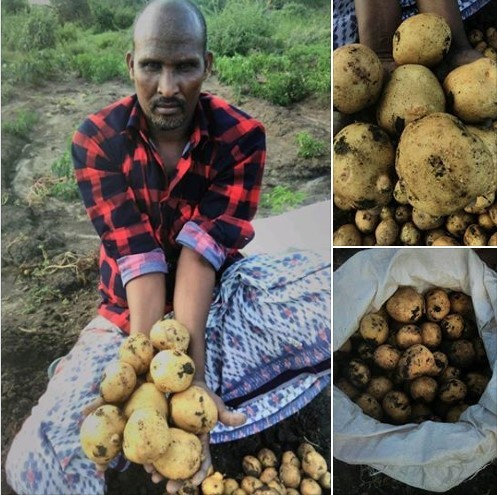
The Nexus is designed to move from resource mapping and institutional coordination into projects that improve productive capacity, resilience and household wellbeing. A first potato harvest in Wajir illustrates the kind of locally grounded outcome that food systems, water, knowledge, finance and public-sector support can unlock when they are structured together.
The architecture therefore links programme logic to evidence: viable production, stronger local markets, climate-responsive systems and investable pathways that can be adapted across counties and regions.
Technical know-how, county priorities, partner capability, programme budgets and community insight.
Resource mapping, research, policy dialogue, capability building, project screening and financing strategy.
Actionable projects, consortia, financing instruments, shared information and operational coordination.
Coordinated public and private action, stronger local capability and more viable economic opportunities.
Food security, clean water, affordable energy, environmental stewardship, livelihoods and health.
A programme-logic presentation connecting coordination, resource mapping, domestic resource mobilisation and partnership structures.
Download resource →Open the curated archive for programme documents, public downloads and reader-facing summaries.